
As an Amazon Associate, I earn from qualifying purchases at no extra cost to you.
Can a Plunger Unclog a Bathroom Sink? (Yes in 4 Steps)

Often, you’ll find your bathroom sink drain backing up, leaving you with a bowl full of standing water. It’s a frustrating mess that happens when hair and soap scum build up right below the stopper. You might think you need a pro, but a simple tool often does the trick for you. Let’s look at how to get your water moving again, so you can stop worrying about that puddle.
Yes, a standard cup plunger can work wonders on your sink if you use it the right way. You need a good seal around the drain for the pressure to push the blockage down the pipe. It’s a quick, cheap fix that you can try before calling anyone.
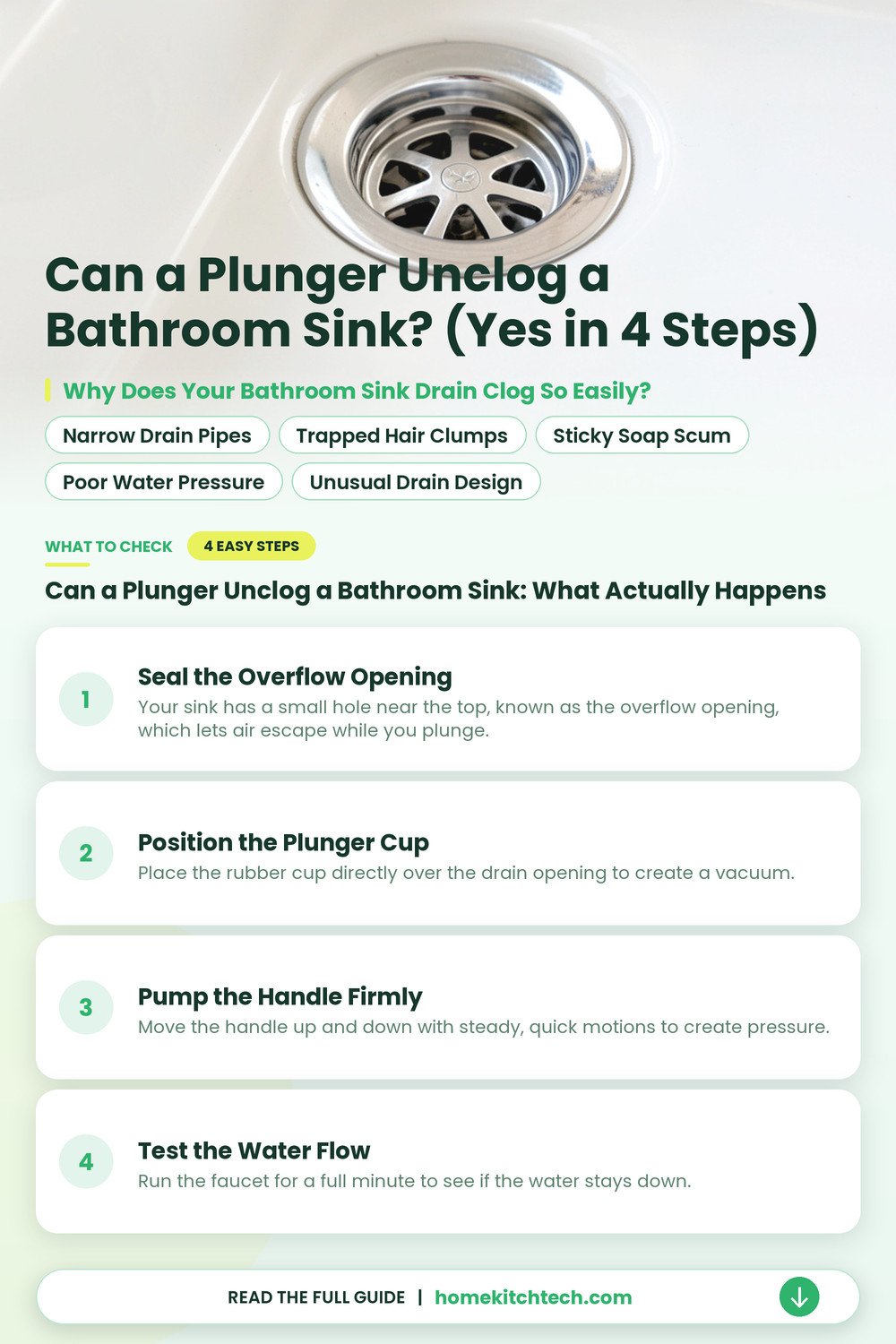
Why Does Your Bathroom Sink Drain Clog So Easily?
Your drain pipes aren’t very wide, so it’s easy for small things to get snagged. You’ll notice that the bathroom sink stopper often acts like a net, catching everything that goes down.
Narrow Drain Pipes
The pipes under your basin are thin, so they save space inside your vanity. You’ll find that anything larger than a marble struggles to pass through the curves, but this makes it easy for debris to pile up fast. This happens because your pipes have a small pipe diameter that restricts movement.
Trapped Hair Clumps
Hair is the number one enemy of your bathroom plumbing, and it tangles around the crossbars of the drain. These crossbars act like a hook, catching every strand that comes your way. You’ll see your sink drain slower and slower until it finally stops moving water entirely.
Sticky Soap Scum
The walls of your pipes catch bits of soap, which creates a sticky soap scum layer over time. This film acts like glue for other debris that you wash down. You’ll notice the drain gets crusty, which makes clogs more likely.
Poor Water Pressure
Sometimes, your pipes don’t have enough water volume to push debris all the way to the main sewer line. You’ll find that light clogs stay in the pipes instead of flushing out, so they settle and harden into a real problem for you. These blockages grow until they become a solid debris mass.
Unusual Drain Design
Most bathroom drains have a pop-up mechanism that sits right in the path of the water. You’ll see this mechanical part sticking up, which gives debris a place to anchor. This engineering choice makes your sink look good, but it causes clogs.
Can a Plunger Unclog a Bathroom Sink: What Actually Happens
You’ll need a small cup plunger and a damp cloth to get the best results. It’s a quick job that usually takes less than 15 minutes to finish, so keep a bucket nearby to catch any spills.
- Choose a flat-bottomed cup plunger for the best seal on the drain.
- Expect to spend about $10 for a basic plunger at any hardware store.
- Wear rubber gloves since the water coming back up is often very gross.
Seal the Overflow Opening
Your sink has a small hole near the top, known as the overflow opening, which lets air escape while you plunge. If you don’t block this, the air will just push through that hole instead of clearing your pipe. Take a damp rag and press it firmly against the hole to keep the air inside the drain. This simple trick keeps all the force focused where it belongs.
You’ll need to hold the rag tight with one hand while you work the plunger with the other. Ask someone to help you press it down if you can’t hold it yourself, as that helps keep the seal tight.
Position the Plunger Cup
Place the rubber cup directly over the drain opening to create a vacuum. You want to make sure the rubber edges are flat against the porcelain, so no air leaks out. Push down gently at first to get the air out of the cup. If you don’t get a good seal, the pressure will escape and you won’t move the stubborn drain clog.
Make sure your sink has at least a few inches of water in it to help the plunger cup grip the surface. It’s the water that pushes the blockage, not just the air, so keep the cup submerged while you work.
Pump the Handle Firmly
Move the handle up and down with steady, quick motions to create pressure. You should feel the suction working as you pull back and push down on the sink drain pipe. Keep this up for about 30 seconds, then lift the plunger to see if the water drains away. Don’t use too much force, or you might damage the seals under your sink.
Test the Water Flow
Run the faucet for a full minute to see if the water stays down. If it drains fast, you’ve successfully cleared the path for your water. You’ll know it’s fixed when you don’t see any swirling or backup in the bowl. It’s a great relief when the water finally clears.
If the water still sits there, you might have a clog that is too deep for a plunger. Call a plumber if your efforts don’t work, as they have tools to reach what you can’t.
Can Chemical Drain Cleaners Hurt Your Plumbing?
Chemical drain cleaners create dangerous fumes that you don’t want to breathe while you work. You should also avoid pouring harsh liquids into a sink that’s already blocked, because they stay trapped and eat away at your metal or plastic pipes. If you need to clear a stubborn spot, stick to mechanical tools like a plastic drain snake instead.
Your sink pipes often use thin materials, but they can’t handle the heat these cleaners generate while they work. This chemical reaction weakens your joints, and it causes leaks that are much harder to fix than your original clogged pipe issue. Be sure to check your pipes for damage after using any harsh cleaning chemical, so you don’t deal with a surprise flood later.
- Wear thick rubber gloves to protect your skin from chemical burns.
- Open a window to clear out any fumes that might build up.
- Call a professional if you suspect the pipe has already corroded.
When Should You Call a Plumber?
Sometimes, your efforts just aren’t enough to move a deep blockage in the wall. If you try to clear the drain and notice water backing up into your shower or another sink, you have a main sewer line issue that needs a pro. Don’t waste time with a plunger if the water isn’t moving at all after three good tries.
You should also reach out to an expert if you see water dripping under your vanity, or onto your floor. A cracked pipe or a loose nut requires a wrench, and it takes a bit of know-how to get right. Plumbers use special cameras to look inside your walls, which helps them find exactly where your plumbing system problem is hiding.
Try to keep a bucket under the trap while you wait for help to arrive. This keeps your floor dry, and it prevents any mess from spreading. If you hear a gurgle in your pipes without even running the water, that’s a sign your vent system block needs a pro to clear it out.
- Expect to pay about $150 to $300 for a professional drain cleaning.
- Ask the pro to check your pipes for signs of age or rust.
- Keep your receipt if the plumber offers a warranty on the work.
Does the Age of Your Sink Change the Fix?
Older homes often have heavy cast iron or brass pipes that resist pressure differently than modern plastic ones. You’ll find that these older systems have more joints where debris gets caught, so a plunger might not reach the true source of your plumbing system headache. If your sink is a vintage model, be extra gentle to avoid snapping a brittle pipe.
Check the material of your tailpiece, which is the pipe section just below your sink basin. Plastic, or PVC, is common in newer builds and handles a plunger well, but metal parts can dent or crack if you push too hard. You should look for any signs of surface rust before you start your work, as that old pipe material can be fragile.
Cover the metal with a soft cloth while you work if you have a decorative finish on your faucet or drain. This prevents your tools from scratching the surface. Use a flexible drain auger only after you’ve decided it’s safe for your specific pipes, or call someone else if you’re unsure.
- Check your local store for a plunger sized for a sink.
- Avoid using metal tools on plastic parts to prevent deep scratches.
- Look for a stamp on the pipe to see the material type.
Why Does Your Drain Keep Getting Blocked?
Your sink often traps debris because of the rough surfaces inside your U-shaped drain pipe, which is the pipe under your vanity. Bits of hair, toothpaste, and soap cling to these walls and create a sticky mess that grows over time. Once this pile starts, it catches even more stuff every time you wash your hands.
Heat from your water softens the gunk, but it also makes the debris stick tighter to the pipe once it cools down. If your drain design has too many sharp turns, the water loses its speed and can’t push the heavy items through to the main line. This happens faster in homes with hard water that leaves behind mineral crust buildup, which gives the hair and soap a rough surface to snag onto.
Is This a Quick Fix for Your Home?
You can usually clear a basic sink blockage in about 15 to 20 minutes, provided you have the right tools on hand. Start by clearing everything out from under your vanity, so you have room to move your arms. You’ll want a bucket and a few old towels nearby to catch any water that drips once you open the system.
Spend under $20 on a good plunger or a simple hand-cranked auger, as they’re cheap and reliable. These tools last for years if you rinse them off, and you store them in a dry place. You don’t need fancy machines for most clogs, and doing it yourself saves you the service call cost that a plumber would charge.
Stop and walk away for a bit if you don’t see any improvement after working on the drain for a while. Sometimes, a clog needs time to settle or break down on its own. Try again later, or ask a friend for a hand if the drain repair job feels a little too fiddly to handle alone.
Final Thoughts
Most sink clogs are just a buildup of daily habits, but you can manage them with a little patience. Keep your drain clear by wiping out the stopper every week, and avoid thick soaps that turn into paste. If you find yourself reaching for the plunger more than once a month, check your pipes for a deeper issue. Stay consistent with your cleaning, and your water will flow freely.
| Symptom | Likely Cause | Easy Fix |
|---|---|---|
| Slow drain | Soap scum | Manual removal |
| Gurgling noise | Vent block | Check roof vent |
| Water leak | Loose nut | Tighten by hand |
| Stubborn clog | Hair clump | Use small auger |
| Foul smell | Bacteria growth | Clean the stopper |
| Standing water | Deep blockage | Call a plumber |
Frequently Asked Questions
Better not, because a toilet plunger is usually too large to get a good seal on your sink. You’ll find that a small, flat-bottomed sink plunger works much better for your vanity.
Will Boiling Water Melt My Pipes?
Yes, you should avoid pouring boiling water into your sink if you have plastic pipes. It’s best to use cool water, because you don’t want to risk warping the joints or softening the plastic.
Should I Take the P-Trap Off?
You should only do this if a plunger doesn’t work after a few tries. It’s a messy job, so keep your bucket ready and have a towel nearby.
Does Vinegar and Baking Soda Help?
Yes, you can use this combo for minor clogs, but it won’t fix a hard mass of hair. Pour half a cup of baking soda, then wait for the fizz to stop before you flush with water.
Can I Use a Wire Coat Hanger?
Better not, because you’ll likely scratch your pipes or get the metal stuck inside the drain. Buy a plastic drain snake instead, because it’s safer for your plumbing and easier for you to control.
Are My Pipes Too Old to Plunge?
It depends, so check the pipe material before you apply pressure. If you see metal that looks thin or rusted, be very careful or you might cause a leak.
